
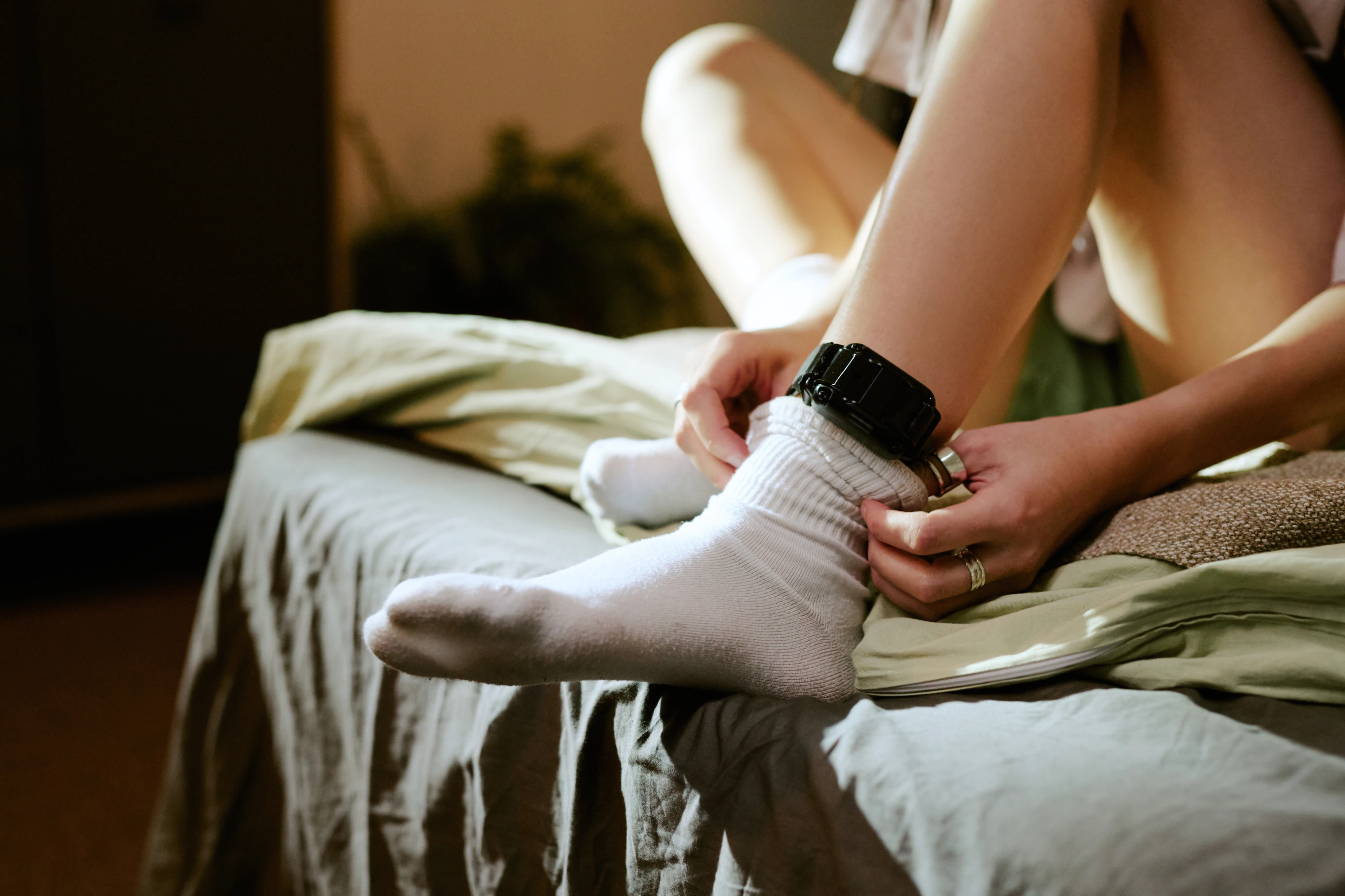
If a judge has ordered SCRAM in your case, or is considering it as a bond condition, it can get complicated quickly. The device, its costs, and the rules for wearing it are more involved than most people imagine — and getting any of it wrong, even accidentally, can trigger a violation hearing.
A SCRAM bracelet is a court-ordered device that tests your sweat for alcohol around the clock. Texas judges order them in DWI cases when they need proof that a defendant is staying sober while a case moves through the system. If you or a family member has been told to wear one, you need straight answers about how the device works, how long you'll wear it, what it costs, and what can trigger a false violation.
Continue reading to find out everything you need to know about SCRAM bracelets, or, if you or a loved one is facing a DWI charge in Texas, get in touch with Ned Turnbull today. E.R. "Ned" Turnbull spent 25+ years as a Texas prosecutor and State District Court Judge before founding Turnbull Legal Group, and he's argued bond conditions, including SCRAM orders, from every seat in the courtroom.
Contact Turnbull Legal Group today at (832) 314-3232 to protect your freedom.
What does a SCRAM bracelet do?
A SCRAM bracelet is built to answer one question continuously: is this person drinking? Rather than relying on a single breath test at a probation check-in, the device samples the air just above your skin every half hour and reports the results automatically, so there's no gap in coverage between appointments.
A SCRAM bracelet does the following things
- Transdermal alcohol testing. The device reads ethanol vapor released through your pores as your body processes alcohol, rather than testing your breath or blood directly.
- Automatic data transmission. Readings are logged on the device and uploaded to a base station in your home whenever you're within range, then forwarded to your supervising officer or the court.
- Tamper alerts. Infrared and temperature sensors detect if the strap is cut, loosened, or if an insulating material is placed between the device and your skin.
- Activity and location signals. Some units log movement and connectivity gaps, which can flag when a wearer traveled outside an approved area or outside base station range for an extended period.
Basically, a SCRAM bracelet functions as an around-the-clock witness to your sobriety. That's precisely why courts favor it over periodic testing in higher-risk DWI cases: it closes the loophole of drinking between scheduled check-ins, and it gives the court a documented record it can point to at every hearing between now and sentencing.
How SCRAM bracelets measure alcohol consumption
Traditional breath and blood tests only capture a single moment in time. SCRAM systems were designed to solve that problem through continuous alcohol monitoring, which tests automatically rather than waiting for a scheduled appointment.
The device takes a reading every 30 minutes, whether you're asleep, at work, or driving to a court date. Even a modest amount of alcohol consumption will show up in your perspiration as your body metabolizes it, which means the monitor can flag drinking that would never be caught by a probation officer seeing you once a week. This is also why courts view SCRAM as one of the more reliable forms of electronic monitoring available for alcohol-related offenses — the sampling frequency leaves zero room to time your drinking around a test.
When do court orders feature SCRAM bracelets?
Texas judges don't order alcohol monitoring bracelets in every DWI case; they're reserved for situations where the court has a specific reason to want continuous verification of sobriety. In practice, that decision usually occurs in one of a few scenarios:
- Pretrial release conditions. If you're granted bond but have a prior DWI, an elevated BAC, or an aggravating factor like a collision, the court may require SCRAM to allow release while still protecting public safety.
- DWI probation. Repeat offenders and those convicted of intoxication-related felonies are frequently ordered onto continuous monitoring as a probation condition, sometimes for the full term of supervision.
- Alternative sentencing. A judge may allow a defendant to serve part of a sentence on monitored house arrest instead of in county jail, using SCRAM to verify compliance.
- Bond violations. If you've already tested positive for alcohol, missed a check-in, or picked up a new arrest while on bond, the court can add or upgrade to SCRAM as a stricter condition of continued release.
Because these court orders are discretionary, the facts your attorney presents at the bond or probation hearing directly influence whether SCRAM is imposed at all, and for how long. Nothing is set in stone, and your future is still up for grabs. This is one of the reasons you need to hire the best DWI lawyer Houston* has to offer whenever you’re up against DWI charges.
*Looking for a Conroe DWI attorney or Bryan DWI lawyer? Ned Turnbull has spent decades fighting in these very courtrooms, gaining the local knowledge needed to give you an edge.
How long will I wear my SCRAM bracelet for a second DWI?
For a first-time DWI with no aggravating factors, Texas courts sometimes skip SCRAM altogether or order it for a short pretrial window. A first DWI offense in Texas carries far less monitoring exposure than a repeat charge, because the court has less history to weigh.
A second DWI in Texas, however, is treated very differently. Because the offense signals a pattern rather than a one-time lapse, judges typically extend SCRAM orders well beyond the length used for a first offense (commonly somewhere between 90 days and a full year, depending on your BAC at arrest, whether probation is part of the sentence, and how the court weighs your compliance record along the way).
If the charge is enhanced to a felony DWI, monitoring periods tend to run even longer, since felony probation terms themselves are longer and courts want sustained proof of sobriety before easing conditions.
This is all to say that there's no fixed statewide number. The exact duration is set case-by-case by the judge or probation department, and your attorney's advocacy at sentencing is often what shortens that window. If you want to do less (or no) SCRAM time, make sure to hire an attorney capable of fighting your charge.
SCRAM bracelet prices: what you can expect to pay in Texas
Unlike a fine, SCRAM costs are billed directly to the wearer by the monitoring provider, not the court, and they continue for as long as the device stays on. There are typically multiple fees charged to SCRAM wearers by the issuer:
Over a several-month probation period, these fees add up quickly. Courts generally will not lower or waive SCRAM bracelet price simply because of financial hardship, so it's worth raising cost and duration directly with your attorney before sentencing, when there may still be room to negotiate the terms of monitoring.
What to avoid when wearing a SCRAM bracelet
Because the device is sensitive enough to detect trace ethanol vapor, everyday products can trigger a false reading if you're not careful. and the built-in tamper alerts mean the device is also watching for anything that looks like an attempt to interfere with a reading.
Some things that can cause false positives or tamper alerts:
- Alcohol-based hand sanitizers, perfumes, and colognes applied near the ankle or lower leg
- Mouthwash, cough syrup, or other over-the-counter products containing ethanol
- Hairsprays, lotions, and cleaning products with high alcohol content used in an unventilated space
- Soaking the device or submerging it for long periods, which can register as tampering rather than normal bathing
- Placing anything between the strap and your skin, including tape, plastic, or insulating wraps, which trips the tamper sensors immediately
If a false positive does occur, document what you used and when, and contact your attorney right away rather than waiting for a violation hearing to explain it. The earlier the explanation reaches the court, the more credible it tends to look.
Can you fight or modify a SCRAM order?
A SCRAM order isn't necessarily permanent for the life of your case. Courts retain the authority to modify, shorten, or lift monitoring once circumstances change, and defense counsel can request that review at several points along the way.
A few places where you might be able to change your SCRAM order include:
- Bond modification hearings. Your attorney can ask the court to reconsider monitoring conditions if the case delays, if you've maintained a clean compliance record, or if new evidence weakens the State's position.
- Probation review. Many judges will consider lifting SCRAM partway through probation if a defendant has shown consistent, verified sobriety and completed required programs.
- Alternative conditions. In some cases, a judge may agree to a less restrictive form of electronic monitoring, or periodic testing, if the original justification for continuous monitoring no longer applies.
As always, none of these outcomes happen automatically; they require an attorney to actively raise the issue with the court, supported by a clean monitoring record and a clear argument for why continued SCRAM supervision is no longer necessary.
FAQ about SCRAM bracelets
How long can Scram detect alcohol?
Because the device samples continuously every 30 minutes, it can pick up ethanol as your body processes it for as long as detectable vapor is present at the skin's surface. This means if alcohol would still show up on a breathalyzer or blood test, it will show up on SCRAM. That window varies by how much was consumed, but the continuous testing cycle means there's essentially never a gap long enough to drink and clear the system unnoticed.
What are SCRAM bracelet side effects?
Most wearers experience only minor skin irritation, redness, or itching at the contact point, similar to that of any snug-fitting wearable worn continuously. Some people report mild discomfort during exercise or while sleeping on that side, but there are no significant medical side effects tied to normal use. If irritation becomes severe, providers can typically adjust strap tightness or placement.
Can a SCRAM bracelet detect drugs?
No. A standard SCRAM device is built specifically to test for alcohol through transdermal sensing and does not detect marijuana, opioids, or other controlled substances. Courts that want to monitor drug use alongside alcohol typically order separate drug testing (using urinalysis or a different wearable) in addition to SCRAM.
If your case involves both alcohol and drugs, it's worth confirming exactly which conditions the court has ordered, since the two forms of monitoring carry separate compliance rules, separate fees, and separate consequences for a violation.
Don’t wait. Talk to a Texas DWI lawyer before your hearing.
Whether a SCRAM bracelet gets ordered at all, and for how long, often comes down to what the judge hears at your bond or sentencing hearing. Ned Turnbull's background as a former Chief Prosecutor and State District Court Judge means he's evaluated these exact conditions from the bench — and now uses that insider perspective to argue for shorter terms, alternative conditions, or dismissal of the underlying charge entirely.
If you're facing a DWI charge in Harris, Brazos, Montgomery, or Galveston County, reach out to Turnbull Legal Group for a free consultation.
Ned Turnbull has handled DWI cases as a prosecutor, a judge, and now as defense counsel. There's no angle of a SCRAM order or DWI charge he hasn't already seen, and no courtroom that he doesn’t know.
Contact Turnbull Legal Group today at (832) 314-3232 to ask Ned to fight your DWI and take the first step in the fight.
More Helpful Articles by Turnbull Legal Group:
- DWI vs. DUI in Texas: What's the Difference?
- Texas DWI Penalties: Everything You Need To Know
- Texas DWI Laws: What You Need To Know
- How To Beat a DWI in Texas
- What is an Aggravated DWI?
.webp)
Give Your Case Home-Court Advantage.
From criminal defense to personal injury, we bring perspective, strategies, and relationships that not many law firms can offer — and we use them to protect your life.