
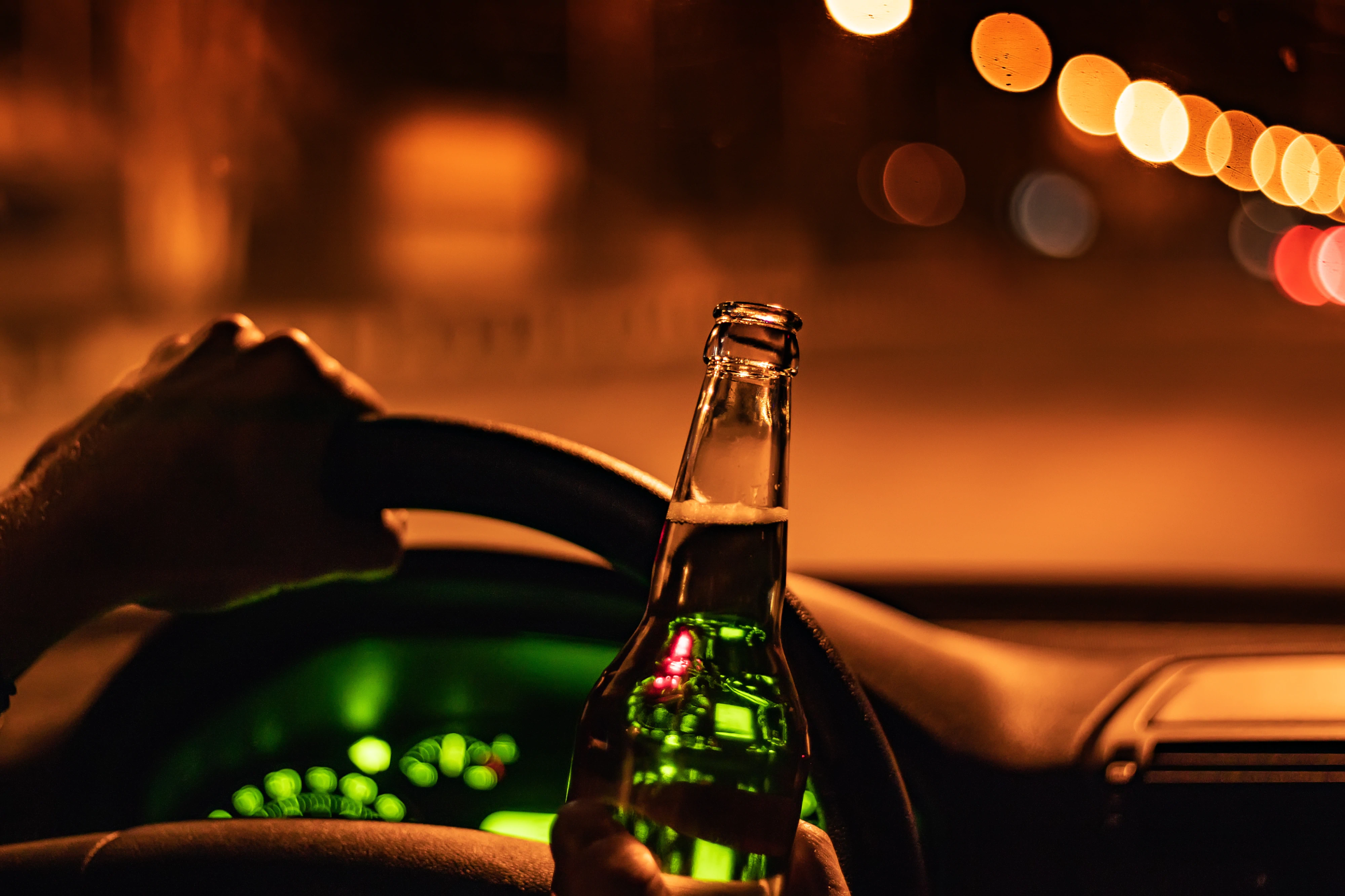
Most drivers know it's illegal to drink and drive in Texas, but far fewer understand the separate, stricter rule that applies behind the wheel whether or not you’re impaired: the Texas open container law.
Under this statute, police don't care about your blood alcohol level, whether you were driving, or whether you'd had a single sip. They only care about what's sitting in the passenger area of your vehicle.
At Turnbull Legal Group, we handle open container citations and the DWI investigations that often follow them across Harris, Montgomery, and Brazos Counties. Below, we break down exactly what the law says, what counts as an open container, where you can legally store alcohol in your vehicle, and what happens if you're cited.
Keep reading to learn more, or contact Turnbull Legal Group today at (832) 314-3232 to start fighting back.
What does Texas law say about open containers?
Texas open container law is codified in Texas Penal Code § 49.031, which makes it a criminal offense to knowingly possess an open container of alcohol in the passenger area of a motor vehicle located on a public highway. The statute applies regardless of whether the vehicle is being operated, stopped, or parked — meaning you can be cited for an open container even if the car is sitting in a parking lot, idling at a red light, or turned off entirely, as long as it's on a public highway or the adjacent right-of-way.
"Public highway" is intentionally broad under Texas law. It covers any public road, street, highway, or interstate open to motor vehicle travel, along with the right-of-way running alongside it.
This means the open container law can apply well beyond the major thoroughfares: it reaches neighborhood streets, parking lots off public roads, and the shoulder where you've pulled over to answer a phone call. This statute works hand-in-hand with the broader Texas DWI laws that govern intoxicated driving, and the two are frequently charged together.
What counts as an “open container” under Texas law?
An open container isn't limited to a can with the tab popped or a bottle with the cap off. Under the statute, an open container is:
- Any bottle, can, or other receptacle;
- that contains any amount of alcoholic beverage;
- that is open, has been opened, has a broken seal, or has had its contents partially removed.
That last part matters because a container doesn't need to be full, or even close to full, to count. In practice, this definition covers more situations than most people expect. Common examples include:
- A beer can with the tab popped, even if it's months old and was never consumed in the car.
- A wine bottle that's been re-corked after dinner. Resealing it doesn't make it "closed" under the law.
- A sealed to-go cocktail or daiquiri that becomes an open container the moment its seal is broken.
- A can or bottle that's technically empty but still has a broken seal or noticeable residue.
Because the definition turns on whether the seal is broken and whether any amount of alcoholic beverage remains, officers and courts have significant leeway in deciding what qualifies, which is exactly why they’re used so often as leverage for DWI cases.
What happens if you are found with an open container of alcohol in your vehicle on a public highway?
If you are found with an open container of alcohol in your vehicle on a public highway, an officer can issue a written citation on the spot. For a standalone open container violation (meaning no other offense is alleged), Texas law generally requires the officer to issue a ticket and notice to appear rather than make a physical arrest, provided you sign the citation promising to appear in court.
The "passenger area" that the law outlines covers the entire cabin: the driver's seat, front passenger seat, back seats, center console, cupholders, and floorboards — essentially anywhere within reach of the driver or a passenger while seated. It applies to everyone in the vehicle, not just the driver, and an officer doesn't need to see anyone drinking to write the citation; the presence of the open container is enough.
It's important to note that an open container in plain view can give an officer additional grounds to investigate further and can constitute probable cause for a broader stop. A former prosecutor and judge like Ned Turnbull has seen this pattern from every side of the courtroom. He knows exactly how officers document these stops and how the State tries to build a case from there.
Where can you legally store an open container? Locked glove compartment, trunk, and more.
The good news is that Texas law does give you legal ways to transport an already-open bottle or can, as long as it's kept out of the passenger area entirely. The key factor is accessibility; if it can't be reached by anyone sitting in the vehicle, it generally falls outside the statute's reach. Some legal storage options include:
- The trunk of the vehicle, which is not considered part of the passenger area.
- A locked glove compartment or similar locked storage container. Unlocked doesn't count.
- The area behind the last upright seat in vehicles without a trunk, like trucks, SUVs, and hatchbacks.
If an open container is anywhere else (whether tossed on the back seat, wedged in a door pocket, or sitting in a cupholder), it's considered part of the passenger area, and it's fair game for a citation.
Can passengers in a car drink alcohol in Texas?
A common misconception is that passengers can legally drink as long as the driver stays sober. Texas is not a passenger-friendly state on this point: the open container law applies to every occupant of the vehicle, not just the person behind the wheel.
If a passenger cracks open a beer in the back seat, both the passenger and the driver can potentially be cited, even if the driver hasn't had a drop to drink and has no idea the container is there.
That last bit surprises a lot of people. Texas law effectively places responsibility on the driver for what's inside the passenger area, which means a sober designated driver can still walk away with a citation because of something a passenger brought into the car.
Open container law in Texas: exceptions to the rule
The statute carves out two narrow exceptions.
- The first covers vehicles designed, maintained, or used primarily to transport people for compensation — buses, taxicabs, and limousines. Passengers in these vehicles can legally possess an open container, since they aren't the ones operating the vehicle and the setup is fundamentally different from a private car.
- The second exception applies to recreational vehicles, motorhomes, or house trailers with distinct living areas. Passengers in the living quarters of a motorhome, self-contained camper, or similar recreational vehicle are exempt, as long as that space is separated from the driver's compartment.
Park the RV for the night and have a drink in the living quarters, and you're outside the reach of the open container statute, but the driver's seat and cab area are still treated like the passenger area of any other vehicle.
Between the passenger area rules, the storage exceptions, and the for-hire and recreational vehicle carve-outs, it's easy to lose track of exactly what is and isn't allowed. Here's a quick summary of where the law stands:
- Illegal: any open container in the passenger area of a private vehicle on a public highway, moving or parked.
- Illegal for passengers, too: everyone in the vehicle is covered, not just the driver.
- Legal storage: the trunk, a locked glove compartment, or the area behind the last upright seat if there's no trunk.
- Exempt vehicles: buses, taxis, and limousines designed to transport passengers for compensation.
- Exempt spaces: the separated living quarters of a motorhome, camper, or recreational vehicle.
Outside of these specific carve-outs, courts have generally read the statute broadly, so it's worth erring on the side of caution any time alcohol is in the car.
Texas open container law walking rules
Section 49.031 only applies to motor vehicles. It has nothing to do with walking down the street with a drink in hand. Contrary to a lot of assumptions, there is no single statewide law that bans public consumption of alcohol on foot in Texas.
Whether you can legally walk down a sidewalk with an open beer depends almost entirely on local city ordinances rather than the vehicle open container statute discussed above. That said, walking with an open container isn't automatically risk-free. Texas' separate public intoxication statute makes it a Class C misdemeanor to appear in public while intoxicated to a degree that could endanger yourself or others, regardless of what you're carrying. And many cities layer their own restrictions on top of state law in specific zones (near schools, in parks, or within designated entertainment districts), so what's legal on one block can be a citation on the next.
Texas open container law penalties
A standalone open container violation is a Class C misdemeanor, the lowest level of criminal offense in Texas. On its own, it's punishable by a fine of up to $500, and it does not carry mandatory jail time. It still results in a criminal citation and can appear on your record, which should be taken seriously even though it feels like a minor traffic ticket.
Where things escalate is when an open container opens the door to a DWI charge. Texas law treats that combination much more severely than either offense alone: a first DWI in Texas with an open container present increases the minimum term of confinement, even for someone who would otherwise qualify for the lowest end of first-offense penalties. Review exactly how open container and DWI penalties stack below.
Because an open container so often becomes the officer's stated reason for further investigation, it's not unusual for what started as a routine stop to turn into a full DWI charge by the time you're standing on the shoulder of the road.
When did Texas open container law change? History of the law.
Texas' open container law is newer than you might expect. It was enacted in 2001 through House Bill 5, passed by the 77th Texas Legislature, and took effect on September 1, 2001. Before then, Texas had no statewide law prohibiting open alcoholic beverage containers in a moving or parked vehicle.
The change wasn't just a policy preference. It was tied to federal highway funding. Under the Transportation Equity Act for the 21st Century, states that hadn't enacted a compliant open container law by specific 2000 and 2001 deadlines risked having a percentage of their federal highway construction funds redirected toward alcohol-impaired driving enforcement instead. Texas brought its law into compliance with HB 5, and the core language of § 49.031 has remained largely unchanged in the decades since.
Texas open container law FAQ
Can I drink in my front yard in Texas?
Generally, yes. Texas' open container statute applies to motor vehicles, not private property, so drinking in your own front yard is typically a matter of local ordinance rather than state open container law. Some cities do restrict alcohol consumption on property visible from or adjacent to certain public areas, but the state-level open container statute in § 49.031 simply doesn't apply to your yard.
Does an open container violation always come with an open container violation record?
Yes. Even as a Class C misdemeanor, a conviction becomes part of your criminal record. It won't carry the weight of a DWI conviction, but it can still show up on background checks, which matters for employment, licensing, and other opportunities down the road.
Can a locked glove compartment always protect me from a citation?
Only if it's actually locked. An unlocked glove compartment is still considered part of the passenger area under Texas law, so simply closing the compartment door isn't enough — it has to be secured.
Don’t let an open container charge turn into something bigger. Call Ned Turnbull today.
The practical risk of an open container stop usually isn't the $500 fine — it's what the stop leads to next. An open container in view gives an officer a reason to look closer, ask more questions, and request field sobriety tests, even if you haven't been drinking. If that stop escalates into a DWI stop, the stakes increase dramatically. If you’ve been charged and you’re wondering how to beat a DWI, it often comes down to how the stop, the container, and the field sobriety evidence were documented in the first place.
Ned Turnbull's background as a former State District Court Judge and Chief Prosecutor gives Turnbull Legal Group a distinct advantage in these cases: he's evaluated this exact type of evidence from the bench and argued it as a prosecutor, so he knows precisely where these stops tend to fall apart.
Whether you’re looking for DWI attorneys in Houston, a Bryan DWI lawyer, or a Conroe DWI attorney, our attorneys are ready to review the details of your stop and build a defense strategy from day one.
Don’t let an open container become a long-standing legal issue. Contact Turnbull Legal Group today at (832) 314-3232 to get it handled.
More Helpful Articles by Turnbull Legal Group:
- What is an Aggravated DWI?
- Is a DWI a Felony in Texas?
- How Long Does a DWI Stay on Your Record in Texas?
- What You Need to Know About a Second DWI in Texas
- DWI vs. DUI in Texas: What's the Difference?
.webp)
Give Your Case Home-Court Advantage.
From criminal defense to personal injury, we bring perspective, strategies, and relationships that not many law firms can offer — and we use them to protect your life.